

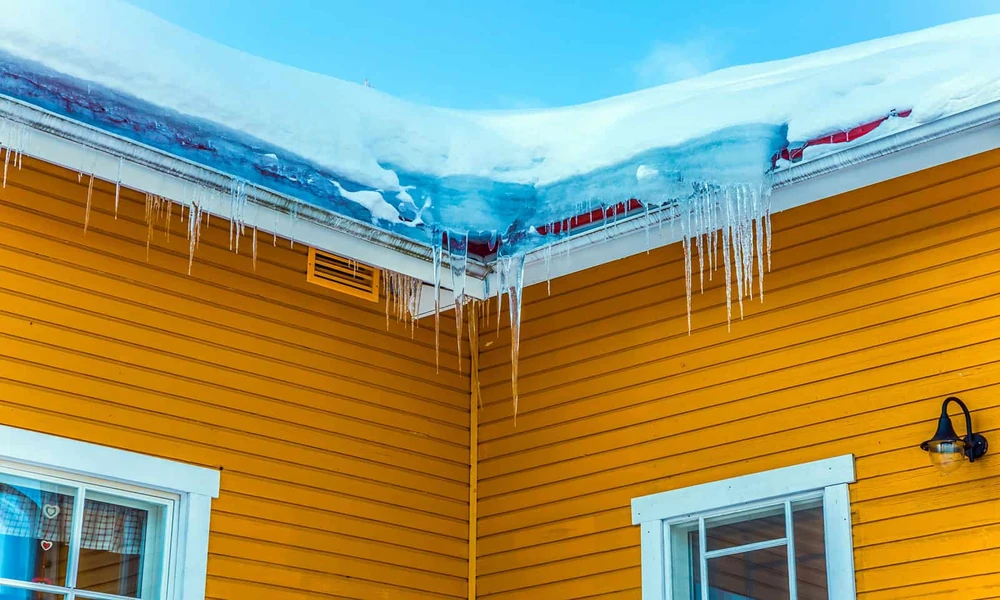
A row of icicles along a gutter can look like a holiday card. In a Minnesota winter, it often means trouble a few feet higher up. A ridge of ice has formed at the roof edge, and it’s holding back a pool of meltwater that can’t drain. That water doesn’t stay on the roof. It works its way uphill under the shingles, soaks into the decking, and drips into insulation and wall cavities. Nobody notices until a brown ring shows up on a bedroom ceiling sometime around March.
Homeowners in the north metro and the lake country beyond it deal with this almost every year. The people who see the worst of it are usually the crews called in after the thaw. Get It Rite Construction LLC has worked out of Zimmerman since 2010, covering towns like Elk River, Princeton, Rogers and Cambridge. Its water and storm damage repair, along with its roofing and drywall work, puts it in the middle of the mess that winter water leaves behind. Reviewers often mention that the owner helped them through the insurance claim, which matters a lot once ice has done its damage.
Physics on the Roof Deck
An ice dam needs three things. There has to be snow on the roof. The upper part of the roof has to be warmer than freezing. And the eaves, which hang out past the heated walls, have to stay colder than freezing. When those line up, snow melts high on the roof, the water runs down, and it refreezes when it reaches the cold overhang. Every melt adds another layer. After a few days of sun and single-digit nights, the ridge of ice can be several inches tall.
Shingles shed water that flows downhill. They were never built to hold back standing water. When the pond behind the dam gets deep enough, water slips under the shingle tabs and finds the nail holes. Asphalt shingles overlap, but they aren’t sealed against water pushing in from below.
Where the Warmth Comes From
Most people blame thin insulation, and sometimes that’s the cause. More often the real problem is warm air leaking into the attic through gaps in the ceiling. Heated indoor air rises, and it gets into the attic anywhere it can. Recessed light cans are a classic leak. So are attic hatches with no weatherstripping, bathroom fans vented into the attic instead of outside, and the open space around plumbing vent stacks. Chimney chases often have an inch or more of open gap around them, and the top plates of interior walls can leak air through every wiring hole.
Older homes add their own trouble. Story-and-a-half houses, common across older parts of Anoka and Sherburne counties, have knee walls and sloped ceilings where insulation is squeezed thin and air moves freely. Additions built decades apart often meet at a valley where snow drifts deep and nobody air sealed the joint. Homes with a heated living space above an attached garage can have the same kind of problem.
Clues Worth Catching Early
Water damage from ice dams moves slowly. That’s why it’s easy to miss until it becomes expensive. A careful walk through the house and the attic in January can save a lot of money in spring. Look for these signs:
- Heavy icicles concentrated over one section of the house while the rest of the roofline stays clear
- Frost or tiny ice beads on the underside of the roof sheathing or on nail tips poking through, visible with a flashlight from the attic
- Damp, matted or discolored insulation near the eaves
- Paint bubbling or peeling on exterior walls just below the soffit
- Window trim that feels swollen, or sills that stay wet on upper floor windows
- A musty smell in a closet that sits against an outside wall
Any one of these deserves a closer look. Two or three together almost always mean water is already getting inside.
Put Down the Hammer
The urge to climb up and chip the ice away is understandable, but that’s how a small leak turns into a torn roof. Hammers, hatchets and ice picks gouge shingles, crack the granule surface, and can split frozen flashing. Ladders on icy ground cause plenty of winter falls, too.
The safer approach starts from the ground. A long-handled roof rake can pull fresh snow off the lower three or four feet of the roof. That removes the fuel for the next melt. Leave an inch or so of snow on the shingles so the blade doesn’t scrape them. To open a drainage path, many homeowners fill a nylon stocking with calcium chloride and lay it across the dam so it melts a channel through. Rock salt is a poor substitute because it corrodes gutters and flashing and burns the plants below. For a dam that’s already leaking, professionals use low-pressure steam, which cuts through ice without damaging the roof.
The Part You Can’t See
Once water gets past the roof deck, the visible stain is usually the smallest part of the problem. Fiberglass insulation that has been soaked and dried loses much of its loft, and with it a big share of its insulating value. Wet cellulose packs down into a dense, heavy mat that can sag the drywall beneath it. Water also runs along rafters and top plates, so it can come out several feet from where it got in, which sends people looking in the wrong place.
Mold is the bigger long-term worry. Guidance from the Minnesota Department of Health makes a point that every rushed repair should follow. Reconstruction should wait until the affected materials are completely dry, and that can take days, weeks or even months. The department also advises against starting with mold testing. Its view is that the money is better spent finding and fixing the moisture source and cleaning up any growth. Covering damp framing with new drywall just because it looks fine is how a winter leak turns into a summer smell.
Paperwork After the Thaw
Homeowners policies treat ice dam damage in ways that surprise people. Many cover sudden interior water damage from an ice dam, such as the stained ceiling and the soaked carpet. Many don’t cover removing the ice itself, and they look hard at damage that seems to have built up over several winters. The details depend on the policy, so it’s worth reading the water damage section before you need it.
Good records help either way. Photograph the icicles and the dam from the ground with timestamps. Photograph every interior stain as it shows up, and keep receipts for anything you do to stop further damage, like renting fans or moving furniture. Most policies expect the homeowner to take reasonable steps to limit the damage. Proof that you acted quickly makes the conversation with the adjuster much easier.
Breaking the Cycle for Good
Heat cables zigzagged along the eaves can keep a drainage path open. Think of them as a bandage, though, not a cure. The lasting fix keeps the roof deck cold and even from ridge to eave. Air sealing comes first, because insulation does little if warm air flows straight through it. After that, adding insulation depth and making sure air can move from the soffit vents up to the ridge keeps the underside of the roof close to outdoor temperature.
When the roof is eventually replaced, the underlayment matters more than most people realize. Minnesota builds to a code that calls for an ice barrier membrane running from the eave to a point at least two feet inside the exterior wall line. That strip of self-sealing material is the last line of defense when everything else fails. Pairing it with a well-sealed attic usually means the next cold snap brings nothing worse than a few harmless icicles that are just ice.
