

A brown ring on the ceiling is one of the most misleading clues in a house. Water rarely drips straight down from the spot where it got in. It finds a gap, runs along the roof deck or a rafter, soaks into insulation, and only then shows up indoors. Sometimes that’s several feet from where the trouble began.
That’s why so many repair attempts miss. A homeowner climbs up, sees a lifted shingle near the stain, nails it down, and a week later the ring grows. Good Springfield roof repair work starts with tracing the water back to its entry point instead of patching whatever looks closest. Understanding how leaks travel, and where they usually begin, makes it much easier to judge whether a fix is real or just cosmetic.
It also helps to know why roofs in this part of Missouri take such a beating. Springfield sits inside the stretch of the country that sees the most severe weather. According to the NOAA National Severe Storms Laboratory, the greatest severe thunderstorm threat in the United States runs from Texas up to southern Minnesota. Strong winds, heavy rain, hail and quick temperature swings all test the same weak points on a roof again and again.
The Usual Suspects Are Not the Shingles
Shingles get the blame, but the field of a roof (the broad, flat areas covered in shingles) is usually the toughest part. Most leaks start where the roof is interrupted by something.
Plumbing vent pipes are a classic example. Each one passes through the roof wrapped in a rubber boot or collar. Sun and heat dry that rubber out over time until it cracks around the pipe. Rain then slides right down the outside of the pipe and into the attic. Replacing the boot is one of the most common and least expensive roof repairs there is.
Flashing is the other big one. These thin metal strips seal the joints where the roof meets a chimney, a wall, a skylight or a dormer. Flashing can loosen as the house settles, rust through, or lose the sealant holding it in place. Chimney flashing in particular causes leaks that show up far from the chimney itself.
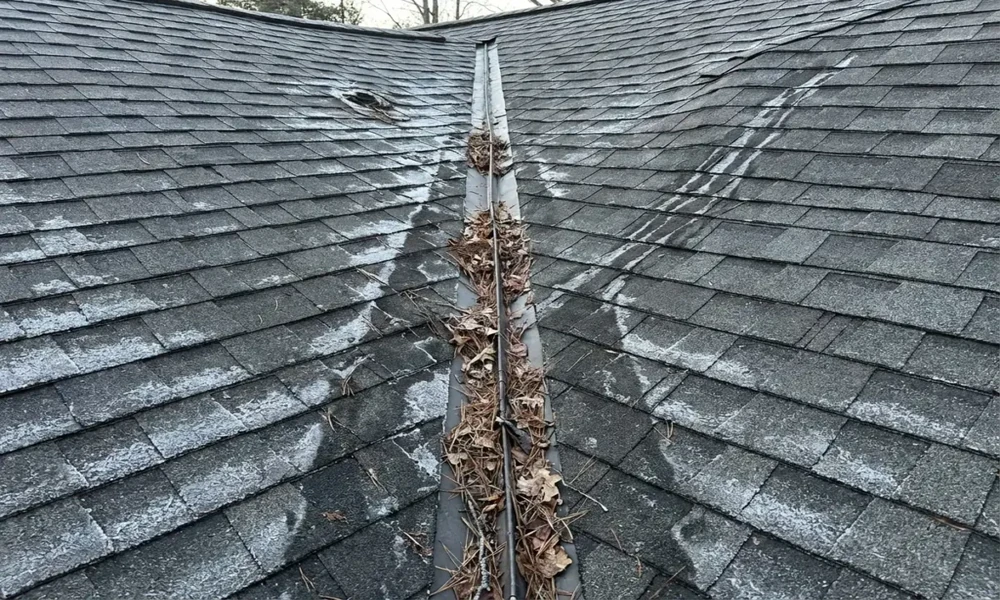
Valleys, where two roof slopes meet, carry more water than any other part of the roof. Debris collects there, granules wear away faster, and a small flaw in a valley can let in a surprising amount of water during a hard Ozarks downpour.
Wind Damage Hides Better Than Hail
After a storm, people look for missing shingles. Wind often does subtler damage. Strong gusts can lift a shingle just enough to break its adhesive seal, then let it settle back flat. From the ground, it looks fine.
Once that seal breaks, the shingle flaps in every later wind. Its nails loosen, and wind-driven rain can push under it. A creased shingle, often visible as a faint horizontal line across the tab, is a strong sign the seal has failed. These spots can usually be repaired one shingle at a time if they’re caught early.
When a Leak Shows Up Tonight
A sudden leak during a storm calls for damage control, not roof work. Climbing onto a wet roof in the dark is how people get badly hurt. A few simple steps protect the house until a proper repair can happen.
- Move furniture and electronics away from the wet area and set a bucket under the drip.
- If the ceiling is bulging with water, poke a small hole at the lowest point to let it drain in a controlled way.
- Head into the attic with a flashlight if it’s safe, and look for wet wood or insulation farther uphill from the stain.
- Take clear photos of the stain, the attic and any outside damage you can see from the ground.
- Note the date and the weather, since insurers and roofers both find that timeline useful.
Those photos and notes often save time later, because they show where the water was traveling before everything dried out.
Repair or Replace Comes Down to a Few Questions
Not every leak means a new roof. A repair is usually the sensible choice when the damage is limited to one area, the shingles around it are still flexible and holding their granules, and the roof has plenty of life left.
Replacement starts to make more sense when problems keep popping up in different spots, shingles curl or crack across whole slopes, or the decking underneath feels soft. At that stage, repeated patches can cost more over a few years than a single replacement would.
Age matters too, but it isn’t everything. A fifteen-year-old roof with good ventilation and no storm history may outlast a younger roof that has taken several hailstorms. Condition beats the calendar.
Storm Season Brings Out the Wrong Kind of Help
After a major storm, door-knockers often show up in neighborhoods offering fast repairs. Some are legitimate. Others take a deposit and vanish, or do rushed work that fails by the next season.
The Federal Trade Commission offers practical guidance on avoiding home improvement scams. It suggests checking with local consumer protection officials and searching a company’s name alongside words like “complaint” or “review.” Asking for proof of insurance, getting a written estimate that spells out the scope of work, and never paying the full amount upfront are all simple protections.
Small Fixes Protect the Whole System
A roof works as a system. The decking, underlayment, flashing, ventilation and shingles all depend on each other. A small leak left alone for a season can rot decking, soak insulation, encourage mold in the attic and weaken the very structure a future repair would rely on.
That’s the real case for paying attention early. A cracked vent boot or a lifted shingle is a minor fix when it’s caught in spring. The same problem ignored until winter freeze cycles can turn into a much larger job. In a region where storms return every year, the homes that hold up best usually aren’t the ones with the newest roofs. They’re the ones where small problems got fixed while they were still small.
