

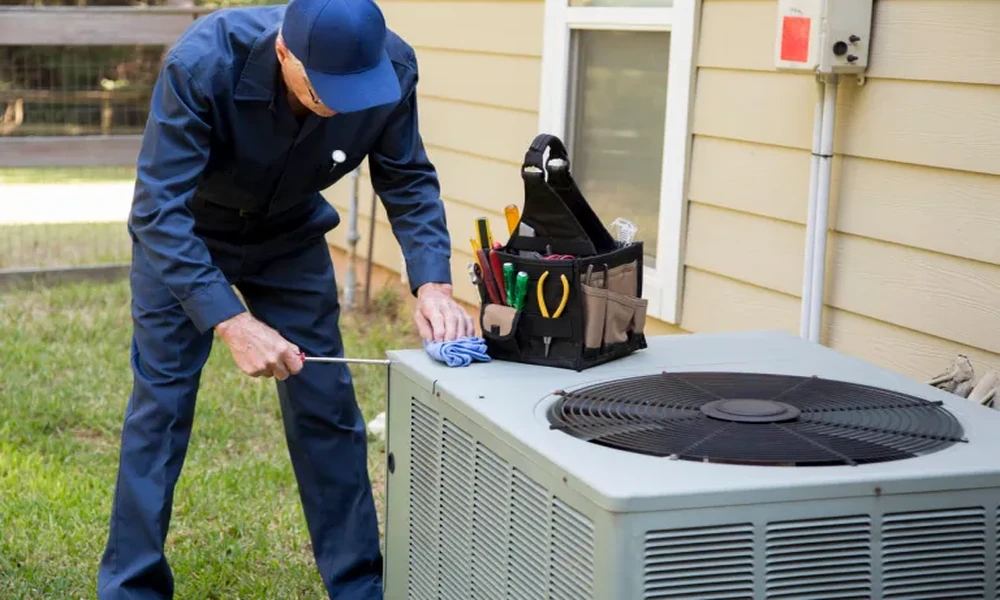
Few pieces of paper sting quite like a repair quote handed over on a 100 degree afternoon. The technician has found something serious, the number at the bottom has a comma in it, and somewhere in the conversation the word replacement came up. Suddenly a choice that deserves weeks of thought is being made in a sweltering kitchen.
That choice is rarely as simple as either side makes it sound. A repair can buy five solid years or five shaky months. A brand new system can slash power bills, or it can simply inherit the same problems if the ductwork feeding it is failing. Sorting one outcome from the other comes down to a handful of facts any homeowner can gather, and a second opinion is one of the most useful.
Getting that opinion locally is easier than many people expect. Clendennen Services, an hvac company in Marble Falls and Carrier Factory Authorized Dealer, gives free second opinions as well as free estimates, holds an A+ rating with the Better Business Bureau and arranges financing for larger installs. Its crew also inspects ductwork, which ends up mattering in this decision far more than most people realize.
Age Tells Part of the Story
Air conditioners in the Hill Country work hard. Cooling season around Lake Marble Falls often stretches from April deep into October, so a system here racks up more running hours than the same unit in a milder state. Most central air systems in this climate last somewhere around 12 to 15 years. Heat pumps, which cool all summer and then heat through winter, tend to land toward the shorter end because they rarely get a season off.
Age alone should not settle anything, though. A seven year old unit with a failed part deserves a repair almost every time. A sixteen year old unit facing the same bill is a different conversation.
The Back of the Napkin Math
Contractors and homeowners lean on two quick rules to frame the decision. Neither is perfect, but together they cut through a lot of noise.
- Multiply the age of the system by the repair cost. If the result passes roughly 5,000, replacement usually makes more sense. A 14 year old unit with a 450 dollar repair lands at 6,300.
- Compare the repair to the price of a new system. Once a single repair approaches half the replacement cost, sinking money into old equipment rarely pays back.
- Add up the last two or three years of service calls. A unit that needs help every summer is telling you something, even if each visit was cheap.
What Broke Matters More Than What It Costs
Some failures are routine wear and barely worth worrying about. Capacitors, contactors, condenser fan motors, clogged drain lines and tired thermostats all fall into this group. Replacing them on an otherwise healthy system is just normal upkeep.
Other failures sit at the heart of the machine. A dead compressor or a leaking evaporator coil can cost a large share of a new system, and on older equipment the next weak part is often not far behind. Furnaces deserve special caution, because a cracked heat exchanger is a carbon monoxide risk rather than a comfort problem.
Refrigerant adds another layer. Systems built before 2010 often run on R-22, which is no longer produced, so recharging them has become expensive. Newer equipment uses R-410A, and installations from 2025 onward are moving to lower impact refrigerants such as R-454B. A system that needs a top off every year has a leak, and refilling it is a recurring cost rather than a repair.
The Ducts Hiding in a Hot Attic
Plenty of homes around Marble Falls, Burnet and Kingsland keep their air handler and ductwork in the attic, where summer temperatures can climb past 130 degrees. ENERGY STAR estimates that a typical duct system loses 20 to 30 percent of its air through leaks, holes and loose connections. In an attic that hot, every leak dumps chilled air into the worst possible place.
Crushed flex duct, disconnected boots at the ceiling registers and missing insulation are common finds. Setting a high efficiency unit on top of that kind of ductwork is a bit like installing a new engine in a car with flat tires. Any replacement quote worth trusting should include a look at the ducts, and some of the comfort problems blamed on an aging unit disappear once those ducts are sealed or rebuilt.
Sizing belongs in the same conversation. A proper load calculation, often called a Manual J, looks at insulation, window exposure and square footage instead of simply copying the tonnage of the old unit. Plenty of older homes were fitted with oversized equipment that cools fast, shuts off early and leaves rooms feeling sticky.
Efficiency Numbers Worth Translating
New systems sold in Texas must meet a federal minimum of 14.3 SEER2 for most split air conditioners. Many units still running in local homes were installed at 10 or 13 SEER. Moving from a 10 SEER unit to a modern 16 SEER2 system can trim cooling energy use by roughly a third, and in a long Hill Country summer that saving builds quickly.
Two stage and variable speed systems go further. They run longer at lower output, which holds a steadier temperature and pulls more moisture out of the air, a real benefit in homes near the lakes. They cost more upfront, so the payoff depends on how long the owner plans to stay.
Questions to Ask Before Signing Anything
Whichever way the decision leans, a few questions separate a careful proposal from a rushed one.
- Was a load calculation done, or is the new unit the same size as the old one?
- Will the ductwork be inspected, tested or sealed as part of the job?
- Which refrigerant does the new equipment use, and how does that affect future service?
- Who registers the manufacturer warranty, and how long does labor coverage last? Many parts warranties only extend to their full term when registered soon after installation.
- Does the contractor hold a Texas air conditioning and refrigeration license through TDLR, and will a permit be pulled where required?
A good technician will welcome every one of those questions. The goal is not to squeeze a few more years out of a struggling system or to buy the most expensive option on the sheet. It is to spend money once, on the fix that actually solves the problem, and then forget about the air conditioner until the next tune up.
