

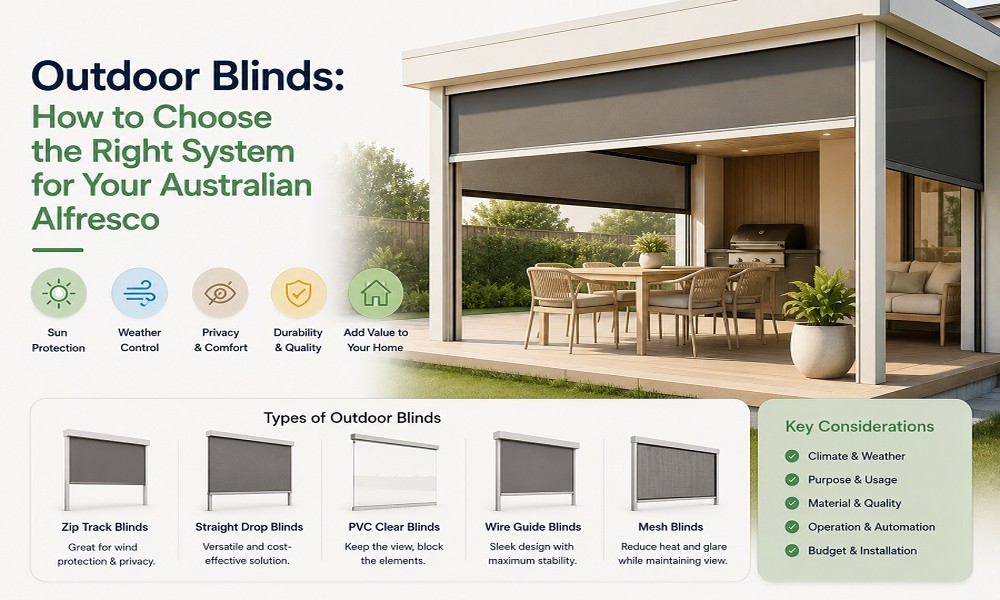
A beautiful alfresco area that floods with afternoon sun or turns into a wind tunnel during a southerly change gets abandoned when it should be enjoyed. Outdoor blinds solve that problem – transforming underperforming outdoor spaces into genuinely usable extensions of the home across more of the year. But the range of systems, fabrics, and operation types is broader than most homeowners expect, and the decisions made before installation determine how well the blinds perform and how long they last.
Why Outdoor Blinds Are Worth the Investment
A well-designed outdoor blind system extends the usable season of your alfresco by managing the three main factors that drive people inside: sun glare, radiated heat, and wind. In practice, that often means the difference between a space used three months of the year and one used nine.
From an energy efficiency perspective, blinds fitted across west-facing alfresco openings or bifold doors prevent radiated heat from entering the living area during peak afternoon sun – cutting air conditioning demand at the most expensive time of day. Privacy and aesthetics are additional benefits, particularly in higher-density suburbs where sightlines from neighbouring properties can compromise outdoor enjoyment.
Ziptrak Blinds: Why They’ve Become the Australian Standard
Of all the outdoor blind systems available in Australia, Ziptrak blinds have established clear market leadership – and the engineering behind that reputation is worth understanding.
The Ziptrak system captures the fabric within a track and spline on both sides and the bottom. The blind operates spring-free and cord-free: push or pull it to any position and release – it holds without a locking mechanism. This sounds simple, but the practical result is significant. The track eliminates the flutter and noise that affects standard drop blinds in windy conditions, keeps the fabric under consistent tension to prevent billowing, and maintains a sealed perimeter that standard blinds can’t match.
The fabric range for Ziptrak outdoor blinds covers every application:
- Sunscreen fabrics – reduce heat and glare while preserving the view; openness factor balances airflow and privacy
- Blockout fabrics – near-total heat and light blockage for heavily exposed west-facing applications
- Clear PVC – full weather enclosure for winter use or rain protection with visibility maintained
Motorised operation is available for taller installations or for integration with home automation systems – allowing blinds to drop automatically at sunset or in response to a weather sensor.
Fabric Selection: The Most Important Decision
Fabric choice has more impact on real-world performance than any other decision in an outdoor blind installation. In Australian conditions, UV resistance is non-negotiable – any fabric used outdoors must carry a UV resistance rating appropriate for continuous sun exposure, typically a 5-10 year warranty from reputable manufacturers.
Wind resistance matters equally for exposed sites. A fabric that performs well in still conditions can flutter noisily and stress its mounting points when regularly exposed to strong winds. If your site is coastal, elevated, or in a wind corridor, specify a fabric and system rated for your wind conditions – not just the cheapest option that looks right in a showroom.
Colour has practical implications beyond aesthetics. Darker fabrics absorb more radiated heat, which can raise the ambient temperature of the enclosed space. Lighter colours reflect more heat but may show soiling. A mid-range tone like grey, stone, or taupe, typically represents the best compromise for most Australian applications.
Installation: What to Confirm Before Signing
- The fixing method for your specific structure – timber pergola, steel frame, rendered masonry, and Colourbond all require different approaches
- Whether patching, sealing, or finishing work around the installation is included or quoted separately
- The warranty covering both the product and the installation workmanship
- The process for adjustment or service after installation if the blind needs attention
Maintenance and Repairs
Outdoor blinds need periodic care to stay performing and looking their best. A gentle wash with mild detergent every few months removes surface soiling before it embeds. Clean the guide tracks periodically and apply a dry lubricant as recommended. Retract blinds during severe storms even in track systems.
When repairs are needed a fabric panel replacement, a damaged track, or motor attention, a specialist outdoor blinds repairs services source parts matched to your system. Generic replacements from non-specialist suppliers are a common cause of compatibility problems and repeat failures.
Final Thoughts
A quality outdoor blind system transforms an underperforming alfresco into a genuinely liveable space across more of the Australian year. The investment is straightforward to justify when you compare the cost to the alternative of leaving the space unused for six months. Get the fabric right, choose an experienced installer, and commit to basic maintenance – and a good outdoor blind system will be one of the most-used features of your home.
